 Search


FAQs
What makes a coin valuable?


I have coins to sell, what’s the next step?
How will my purchases be shipped?
What happens if I’m not entirely happy with my purchase?
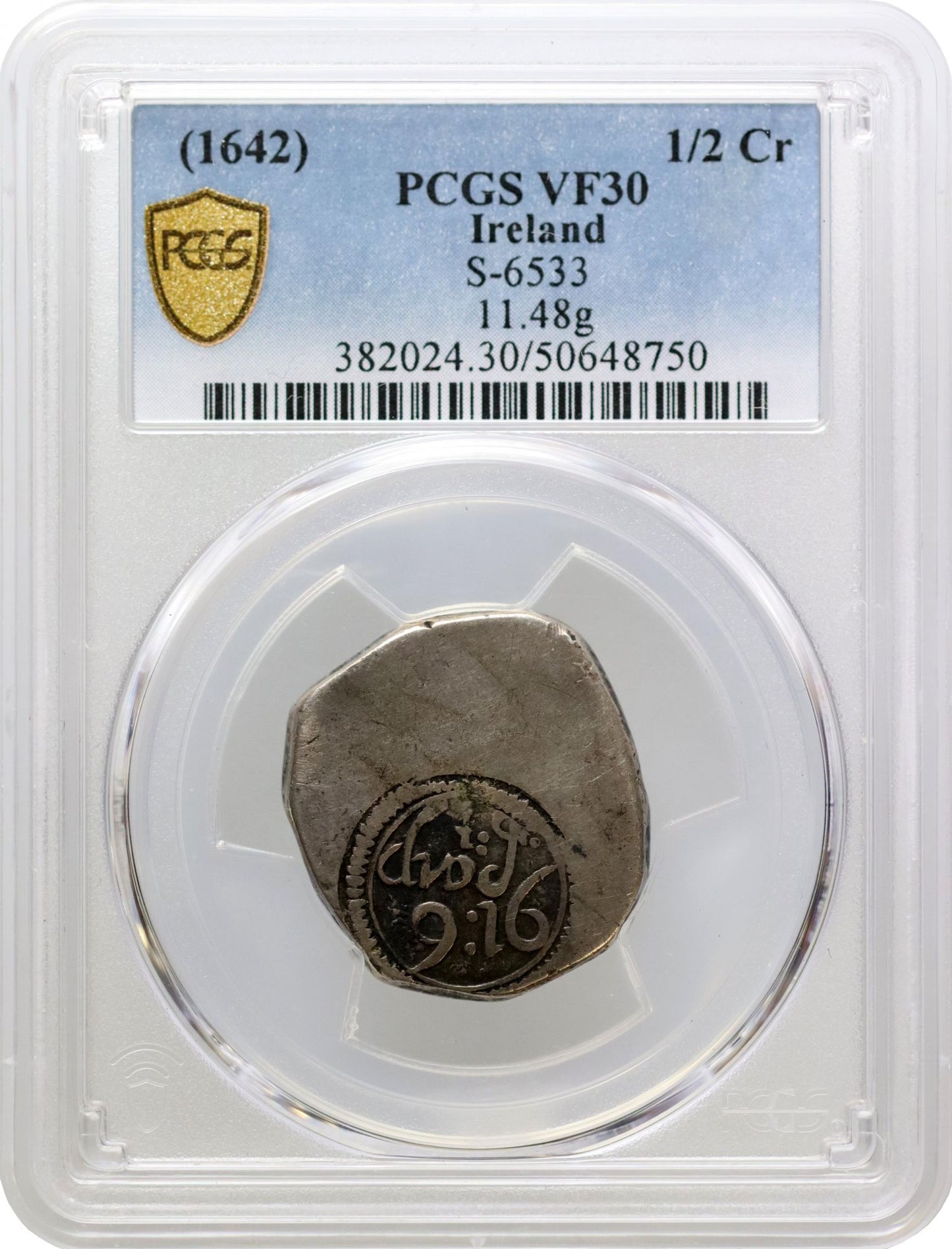
Ireland, Charles I, Coinage of the Lords of Justice, Halfcrown, PCGS VF30
Ireland, Charles I (1625-49), Great Rebellion of 1641-49 issue, "Inchiquin" Coinage of the Lord Justices, silver Halfcrown, undated emergency issue of 1642, uneven shaped planchet of silver, smaller circular stamp each side of text in two lines with linear and beaded circles surrounding, "dwr: gr." over "9:16" both sides, weight 11.48g (D&F 276; S.6533). Toned with the penny weight and grains stamps clear each side, has been graded and slabbed by PCGS as VF30, very rare.
PCGS Certification 382024.30/50648750
By the time of the reign of Charles I much of the native Irish population had become discontent due to religious and racial discrimination and dispossession, which exploded into an outright rebellion in October 1641, as England itself approached civil war. The Irish Parliament had been prevented in passing a Royal bill to alleviate Catholic grievances by two protestant Lord Justices, sparking off a failed attempt to seize Dublin Castle. Upon which the Irish rose up in Ulster under Sir Felim O'Neill slaughtering many of the new "planters" and with insurrection spreading in Leinster and Munster, the English troops and protestant settlers were forced back into the fortified towns of Londonderry and Drogheda in the north, and Cork, Kinsale and Bandon in the south. An army was raised in Scotland under General Munro landing at Ulster to suppress the insurrection and with civil war now breaking out in England in 1642 Lord Inchiquin was appointed commander of the Protestant forces in Munster. Coinage was needed as an emergency to pay for supplies and so the Lord Justices of Dublin issued such coinage cut from silver plate to specific weight with the early issue giving the weight of the silver which circulated at bullion value. This was the first emergent money of this rebellious period, a second issue followed of lower denominations denoted by annulets giving a value in pence. A third cruder issue followed with the denomination on both sides and then a fourth for 1643-44 with a crowned CR on one side and value on the other which was called Ormonde Money after the then newly appointed Lord Lieutenant of Ireland.
Provenance:
Ex Richard August Collection.
FAQs
What makes a coin valuable?
I have coins to sell, what’s the next step?
How will my purchases be shipped?
What happens if I’m not entirely happy with my purchase?

Popular Coins
View all-
* Elizabeth II 2022 silver proof 2oz City Views London
Regular price £220Regular priceUnit price per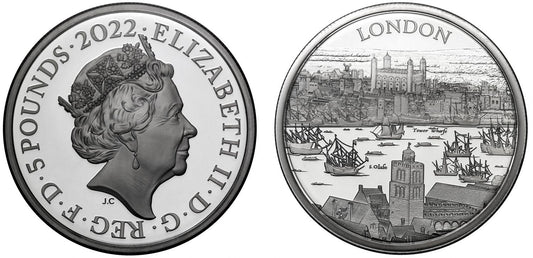
-
* Charles III 2024 gold PF70 UC 1/4oz Britannia
Regular price £1,040Regular priceUnit price per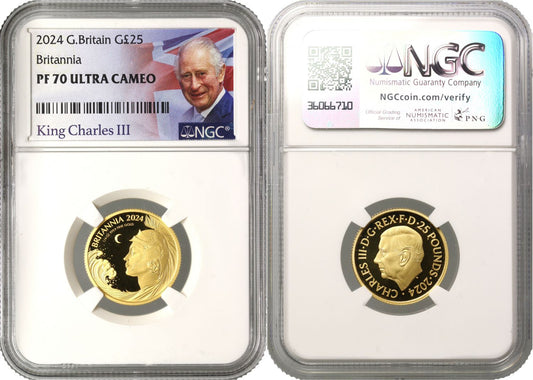
-
* Charles III 2024 gold proof 1/4oz Britannia
Regular price £990Regular priceUnit price per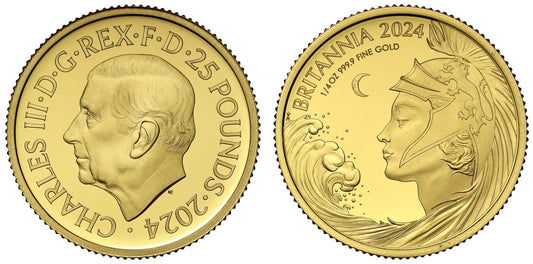
-
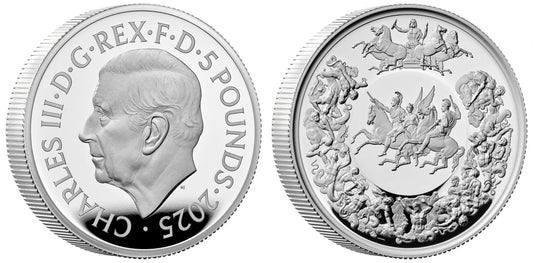
* Charles III 2025 silver proof 2oz Waterloo Victory
Regular price £255Regular priceUnit price per